
     |


Home > HRM Overview
Heart Rate Monitor OverviewIf you are new to heart rate monitor training, the following heart rate monitor overview gives you a quick guide.
What is a heart rate monitor?A heart rate monitor is an electronic device designed to measure and display your current heart rate while you are engaged in sporting activities. Typically it is composed of a wrist watch receiver and a chest strap transmitter. The chest strap detects electrical activities of the heart and sends the information wirelessly to the wrist watch. While exercising, you can see your current heart rate on the wrist watch display and adjust your training intensity accordingly.There are other types of heart rate monitors such as the strapless ones without the chest strap transmitters. But they are not as common. There is a wide range of heart rate monitors in terms of features. The basic features, for example, include allowing you to set heart rate training limits and beep at you if you go above or below those limits. The intermediate features include allowing you to calculate your calories and fat burned during your exercise. The advanced features, for example, including letting you download your training data to a computer or a web site for further analysis. These are just some typical examples. There are a whole lot more features than those mentioned here in this heart rate monitor overview.
Who uses a heart rate monitor?When the heart rate monitor first came out in the late 1970s, it was used primarily by professional sportsmen in the fields of cross country skiing, cycling and running. However in the 1990s it started to be used widely by ordinary folks doing many different types of sports when the benefits of training with a heart rate monitor became increasingly clear. These days it is well established as a useful training tool and is no longer considered an esoteric extra.
Why should I use a heart rate monitor?By using heart rate monitor training, you can control your training intensity to achieve your own specific goal. The human body adapts differently depending on the stresses that it receives. For example, if your aim is to lose weight, you should train within the heart rate training zones for which the primary metabolism is fat metabolism. Note that the training duration should be at least an hour for it to be effective. When you train for such a relatively long duration, body fat starts to be broken up into fatty acids to be used in fat metabolism. Training at higher intensities for shorter durations (say 30 minutes) may mean that you are mostly burning up your body's existing carbohydrate and fatty acid reserves instead. By training at the right intensity with the help of a heart rate monitor, you can effectively realize your goal. In general, working out within your target heart rate zone can help you burn calories more efficiently. Here is an online exercise calorie calculator that can tell you how many calories you burn with many different types of workouts.
When do I use a heart rate monitor?You use your heart rate monitor during your training sessions and possibly during races (if you participate in them). Many of the transmitter belts are quite comfortable to wear and you won't notice it is there once you have worn it for a few minutes. You can also use it in the morning to check your resting heart rate. In the short term, it can tell you whether you are just about to become ill, or whether you have over-trained and not sufficiently recovered, if you heart rate is a fair bit above your normal resting average. In the long term, it can tell you whether you are becoming fitter and fitter. You are if you are seeing a decreasing long term trend for your resting heart rate. Some Polar heart rate monitors come with a fitness test, a handy and motivational feature to measure your long term fitness. There are also some heart rate monitors that come with a recovery timer. What it does is that it measures, after your workout session, how fast (or by how much) your heart rate drops within a given time interval. The faster/sooner your heart rate gets back back to normal, the fitter you are.
How do I use a heart rate monitor?This depends on the individual heart rate monitor model but generally you need to take the following steps for each training session:
If you are doing more complex training with a more sophisticated model, then there are a lot more steps that you can take than outlined in this heart rate monitor overview. Examples include when you are doing interval training or running laps.
Where can I use a heart rate monitor?You are generally fine using a heart rate monitor doing non water-related activities. There are a number of problems when, for example, you want to use a heart rate monitor with a chest strap while swimming. The heart rate transmitter may become loose and shift position while you swim. The heart rate transmitter contacts can become short-circuited by pool or sea water. In these cases the heart rate monitor may not detect accurately your heart rate electrical signals. Further more the wrist watch may not be entirely waterproof and many models do not allow you to press any buttons while swimming. If you do want to use a heart rate monitor while swimming, use a waterproof strapless system. A strapless heart rate monitor consists of only a wrist watch and does not measure heart rate continuously. It measures heart rate only when you put your fingers on the sensors on the watch. So you can do that at the end of your length or session.
Which ones are the better heart rate monitors?Here are lists of recommended fitness heart rate monitors and running heart rate monitors. A fitness heart rate monitor is mainly geared towards someone who trains in the gym, is interested in weight management, or wants to simply improve overall fitness. These days a modern fitness HRM has many interesting features. For example, the advanced Polar FT60 HRM not only monitors your heart rate, it is actually a training adviser, acting almost in the capacity of a coach, telling you how hard, how long, and how often you train in a week. A running heart rate monitor is intended mainly for persons whose main training method is running. A running HRM typically will provide interval timers, laps, and possibly speed and distance measurements. Given that there are hundreds of HRMs on the market, if you are not sure which heart rate monitor is right for you, visiting these two pages may help. Use the lists as a starting point for your own search. Hope that this short heart rate monitor overview gives you a basic overall picture of using a heart rate monitor in training. There are many excellent advanced sources of information available on the web.
Not sure which heart rate monitor is right for you? Take a look at the Which Heart Rate Monitor page.
|
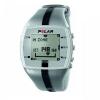
Polar FT4
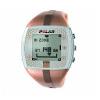
Polar FT4 For Women
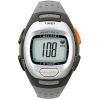
Timex T5G971 Personal Trainer
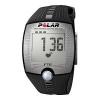
Polar FT2
Timex T5G941 Easy Trainer
Omron HR-100C
Recommended Intermediate Fitness HRMs:
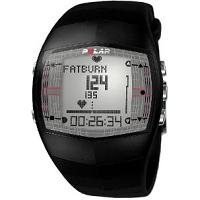
Polar FT40
Polar FT40 For Women
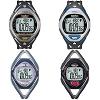
Timex Ironman Race Trainer

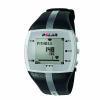
Polar FT7
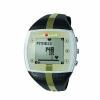
Polar FT7 For Women
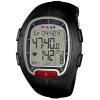
Polar RS100
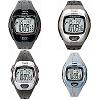
Timex Ironman Zone Trainer
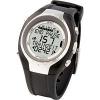
Sigma Sport PC 15